FULL DISCLOSURE: Dear readers of my blog, I may never find the exact reason why the hamlet of Nauvoo in New York State got its name. My compulsive search for anything about this long-forgotten hamlet on Fort Drum has been both frustrating and fascinating. All in all, I am really enjoying this journey. Please stay with me!
History is a jigsaw puzzle. Many pieces are lost forever. Others fall on the floor, get kicked under the couch, and are found later while cleaning. I found a piece that led me to learn about something I never knew of before. Namely, a catastrophic event called The Year Without a Summer in 1816.
In 1815, on the other side of the world in present-day Indonesia, something happened that changed the world. In April of that year, a volcano, Mount Tambora in present-day Indonesia, erupted and spread a tremendous amount of volcanic ash and gases into the atmosphere and blocked the full efficiency of the sun. Its effect was far-reaching. Low temperatures and heavy rain hurt the wheat, oat, and potato crops in Europe. Food riots erupted in many European cities; typhus epidemics followed the sudden lack of basic foods.
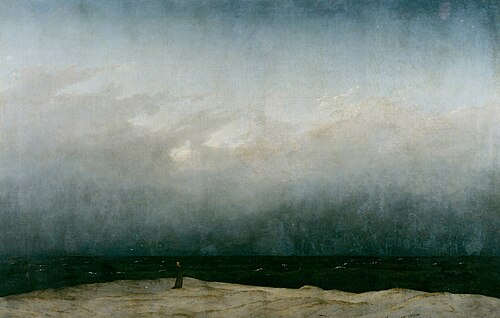
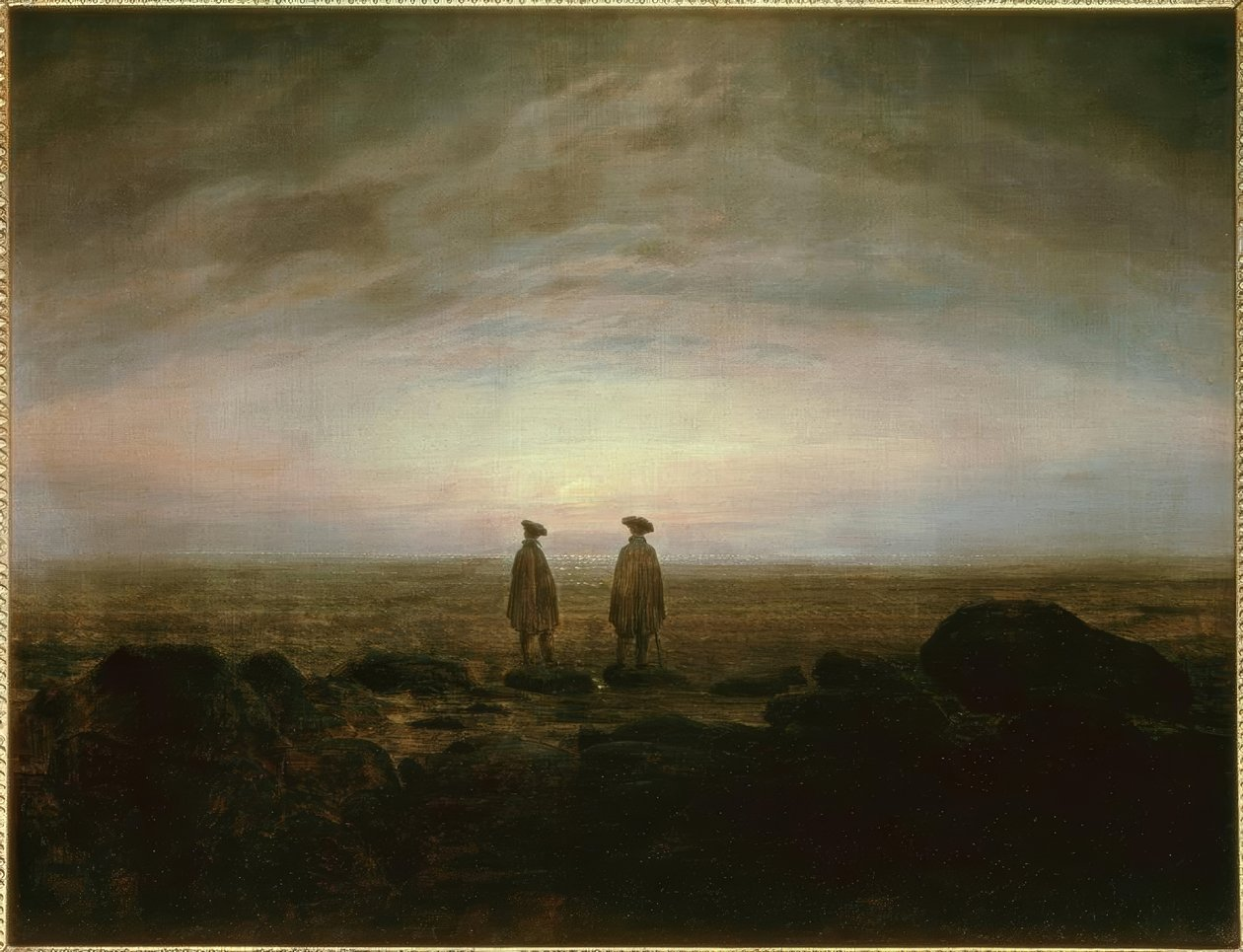
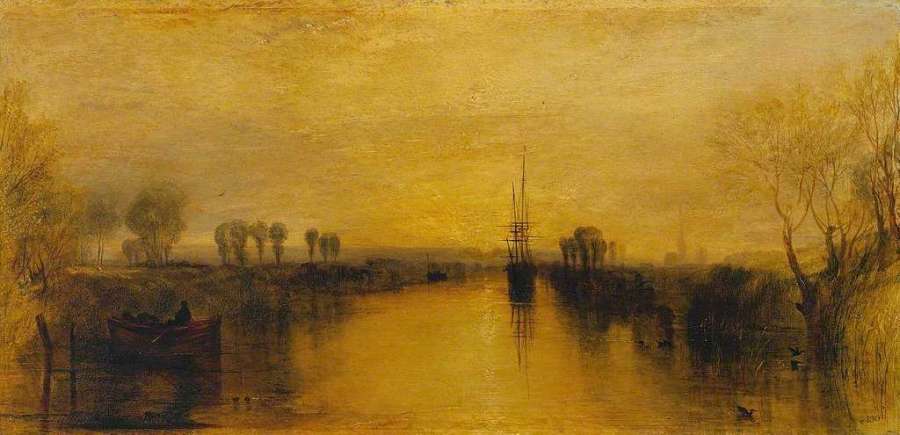
The paintings above were done of the same location in Germany by Caspar David Friedrich. The first one is “Monk by the Sea” (ca. 1808-1810). The second painting, “Two Men by the Sea,” was completed in 1817 to depict the year without a summer. The painting that introduces my post is called “Chichester Canal” by J.M.W. Turner. Some say the red skies in England in 1816 influenced the painter’s color choices.
A “dry fog” dimmed sunlight over Eastern North America. In May 1816, a very late frost killed crops in the higher elevations of Massachusetts, New Hamptire, Vermont, and Upstate New York. On June 6, snow fell in Albany.
Joseph’s Smith’s father, Joseph Sr., was born in Topsfield, Massachusetts, in 1771. In 1796, he married Lucy Mack in Tunbridge, Vermont, where they farmed.
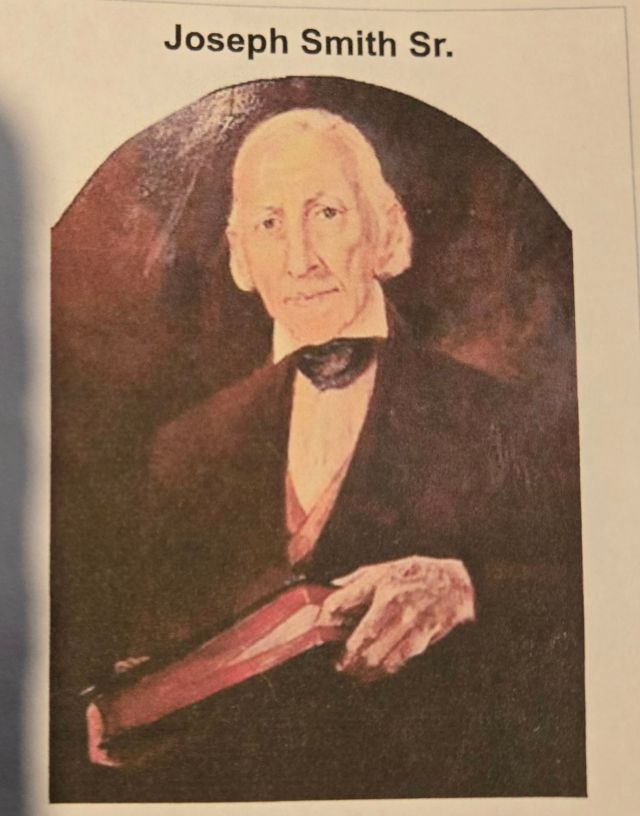
Because of the Mount Tambora eruption, Smith’s family was forced to migrate to Palmyra, NY. They were one family among thousands who left New England for western New York and the Northwest Territory, looking for bluer skies, richer soil, and better growing conditions. And so the Hebrew word “Nauvoo” was planted deep in the ground of New York history. Later, it sprouted in Illinois in the 1830s and in my county in the 1850s.
A small but fascinating detour: Here is proof of the lovely wild zigzags of research. In June of 1816, the volcano eruption brought “incessant rainfall” during a Swiss holiday for some notable writers. Lord Byron, a member of the group, proposed a contest ot see who could write the scariest, gloomiest story. Mary Shelley began a piece that would evolve into the book Frankenstein. Lord Byron wrote a piece called “A Fragment,” which another member of the group, John William Polidori, used as inspiration for The Vampyre. His book, along with European folklore and other dark works of 19th-century authors, later motivated Bram Stoker to write the novel Dracula.
“Life is a journey, not a destination”
Copyright 2026 theautonomoustraveler.com All rights reserved!

