It is unpleasant to be tricked, especially when you have accepted something as accurate, and it’s not. History often comes in carefully crafted pieces, sliced and diced, to keep secrets. But the true story is always there. Sometimes, it involves digging around and engaging in the messy job of putting forgotten or hidden pieces back together again. Visiting England, I found connections to a chapter in history that turned out to be way bigger than I ever imagined.
I had studied slavery in high school and college. I visited a slave market site in the Deep South. I had heard about the bodies of millions of African slaves tossed overboard into the Atlantic when they became sick or died during their ocean passage. But I didn’t know about the extent and impact of The Atlantic Slave Triangle, a four-continent, multinational scheme to make a large amount of money off the misery of others.

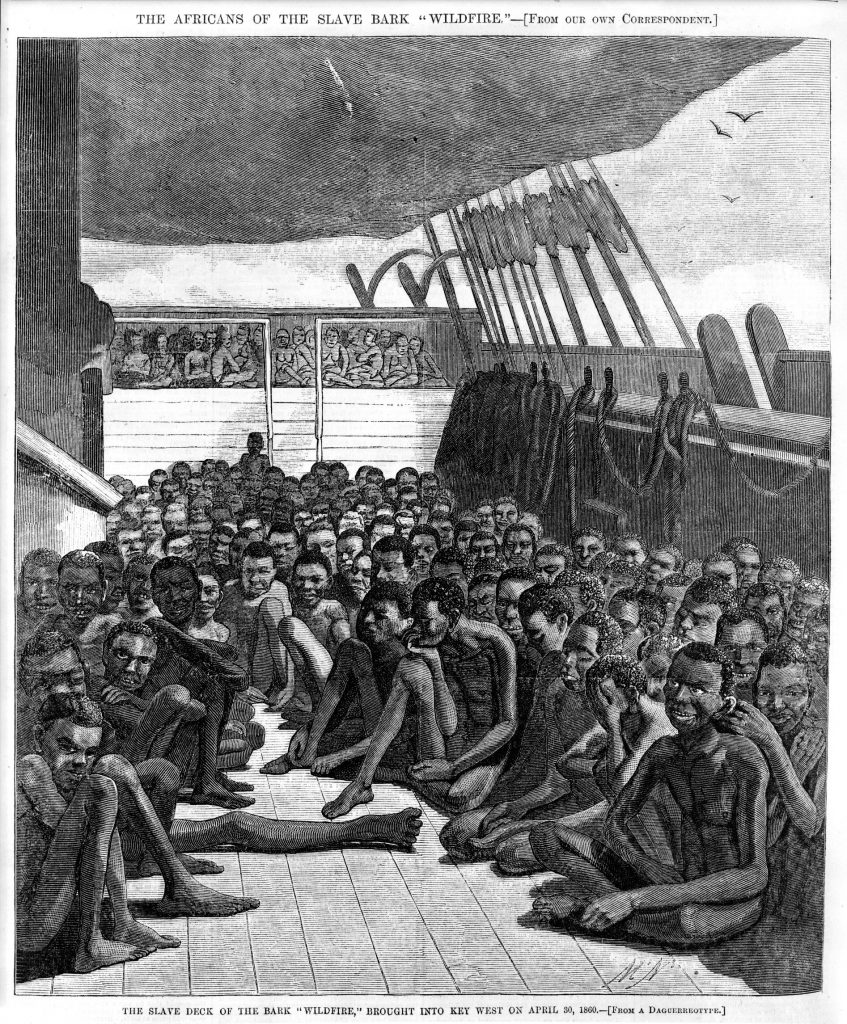
The story began with the world’s craving for sugar. As European colonization spread to the Western Hemisphere, growing sugar cane in the ideal climates of The West Indies and parts of South America became very lucrative. As demand rose, more labor was needed. So, people from England, France, Spain, Holland, and Portugal, who thirsted for money, worked with and off each other to set up a financial system motivated by greed and guaranteed profit.
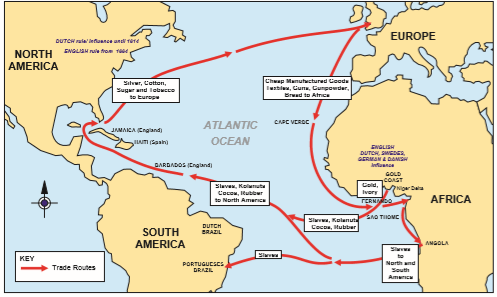
Africa was the first point in this triangle. Africans in power were willing to sell off their prison population, and aggressive warlords were only too willing to gather and sell captives. Europe traded rum and brandy, tobacco, firearms and gunpowder, flour, rice, iron tools, and cloth for enough bodies to fill many ships. They built outposts along the coast of West Africa as slave processing centers.
Bankers and investors, far from the messiness of the whole system, jumped on board. Shipbuilding flourished. The northern American colony had a guaranteed market for their wheat since it was needed to feed the slaves. American products (sugar, tobacco, cotton) produced on the plantation and byproducts like rum had eager buyers on the European continent. Places like Bristol, England, and Nantes, France, became hubs for trading and distributing goods from the colonies. They, in turn, sent cheaper goods to Africa to purchase more slaves.
For a while, it became illegal to transport slaves across the Atlantic. The price of slaves actually went up during this time as smuggling became widespread. The Atlantic Slave trade lasted 366 years and gradually diminished as citizens realized the cruelty and brutality of the system and spoke out. Haiti outlawed slavery in 1804, Greece in 1823, Mexico and Central America in 1824, England in 1833, and France in 1848. The United States, after the struggle of The Civil War, emancipated its slave population in 1863. Slavery persisted in Puerto Rico until 1873, in Cuba until 1886, and in Brazil until 1888.
As I delve into history, I see patterns that repeat. Again, we are experiencing a labor shortage. The paradox is we have a hateful basis against foreign workers, but we seem to think nothing of using them. As I travel, I encounter people from other countries doing service jobs that no one else wants to take. I make a point of talking to them and wishing them the best. Are they hired because they are cheaper and safety standards can be relaxed? The news frequently has stories about immigrant workers becoming injured and even dying on the job.
Can this present practice of profiting from the misery of others be corrected? Slavery in our country did end. The abolitionist movement of the 19th century was a dynamic force in my home state of New York, my county, and my hometown. Those early activists acknowledged the rights of individuals and raised their voices to move American concerns away from big money and toward a better structure of humankind and society. Do we need to get involved again by being aware of unfair practices and calling out those with money and power who take advantage of the powerless? Numerous secret practices harm our world, and many things don’t make sense. It may be time to ask questions again.
Coopyright 2024 theautonomoustraveler.com All rights reserved.
 The Autonomous Traveler
I liked this piece. There were a few things I did not know, and viewing it as a global issue was revealing.
LikeLike
Thanks, Karen. I am really disappointed that this wasn’t revealed to me in high school or college. We really have to work hard to understand what happened in the past and what is still happening today.
LikeLike
Thank you, Joyce, for taking my mind to a different place. I needed this reading. 💙
LikeLiked by 1 person
Thank you, my friend!
LikeLike