A curse, some coins, and a killing. Little did I know that a road trip to an abandoned mental hospital would lead me to a story about the art world, a scandal, and a tragedy.

I believe everyone I meet is a teacher ready to expand my worldview and increase my knowledge. The antique shop owner in Heuvelton, New York, was an excellent instructor. He saw my interest in history as I looked through his collection of old books and purchased several yellowed magazines from the early 1900s. I told him of my interest in St. Lawrence State Hospital. He asked me if I had ever heard of Audrey Munson, and opened a new path of exploration for me.
Audrey Munson was from upstate New York, my part of the world, but I had never heard of her. She was born in Rochester in 1891 and grew up in Mexico, New York, near where I attended college. Her father left when she was a child, and her mother, Kittie, divorced him in 1899.
When Audrey was five, Kittie took her to East Syracuse to see the Gypsy Queen Eliza, who was touring the US from England. Apparently, a gypsy festival was an annual event in Central New York, marking the fall migration of these colorful people from Canada to the south. Audrey couldn’t see Queen Eliza, but her mom took her to a fortune teller who saw a distressing future for the little girl. She predicted that Audrey would be famous, but that happiness would always elude her, that she would make a lot of money but end up poor, and that she would never find love, as seven men would promise to make her their bride, but none would marry her. For some reason, throughout Audrey’s life, Kittie would remind her daughter of this fortune teller’s reading. Maybe it was this divorced woman’s way to control her daughter and prevent being abandoned once again.
Kittie became a stage mother, encouraging Audrey’s dream of becoming a dancer and actress. Audrey was discovered during a trip to New York City for a recital at the age of fourteen, walking down a busy Manhattan street. Her career quickly took off as she became a favorite model, especially for sculptors. She was sought after and became quite a celebrity known as “Miss Manhattan” and “The American Venus” as likenesses of her appeared all over NYC and The US.



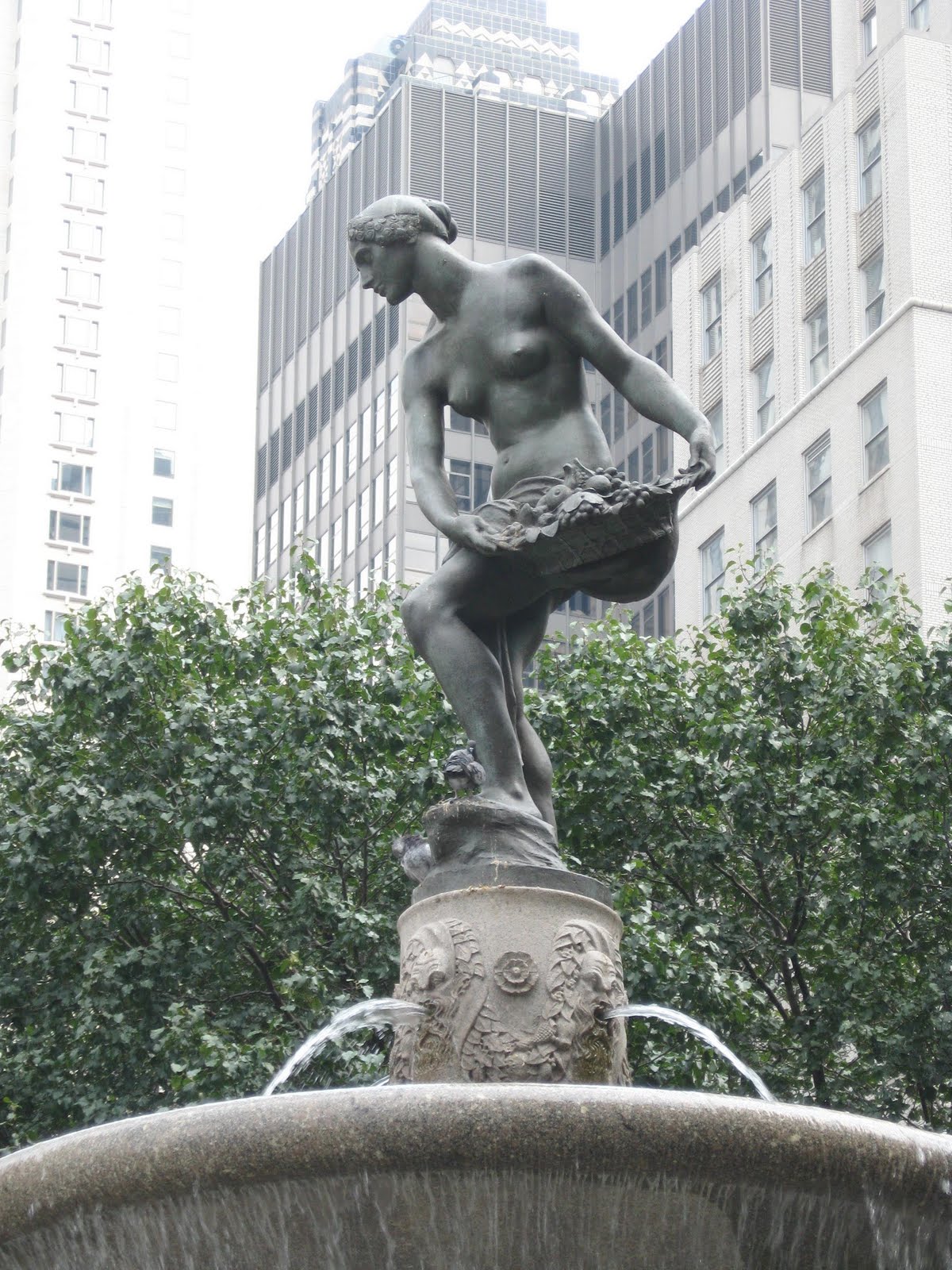
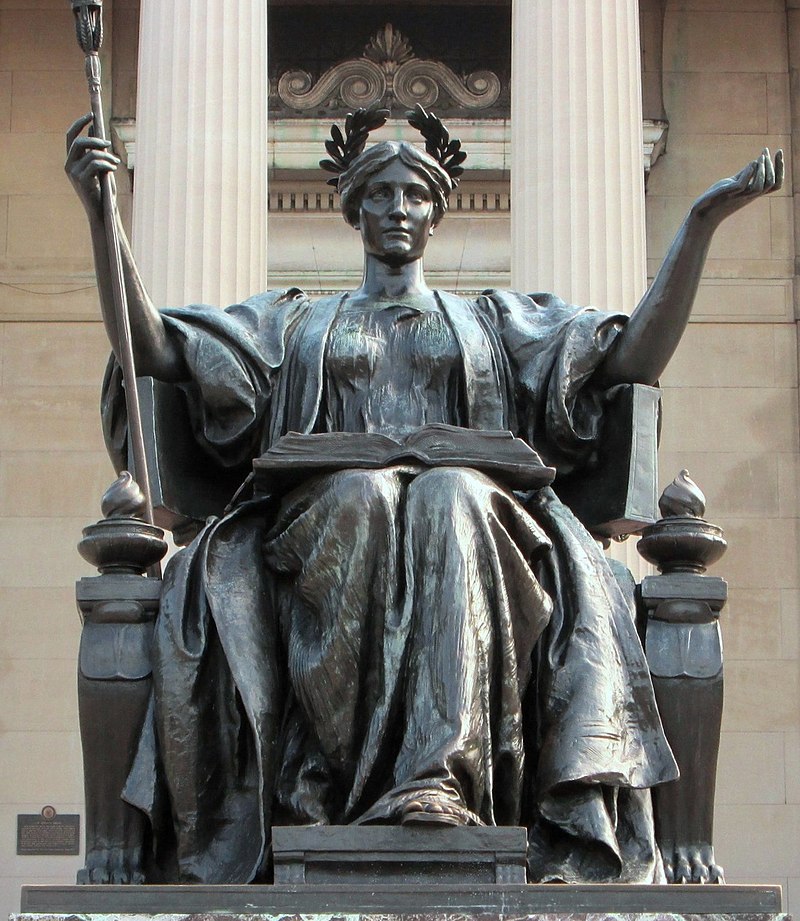
She became a star and was invited to exhibit openings and all the best parties. People were awestruck by her beauty as she walked down Fifth Avenue dressed in the latest fashions. She believed in women’s independence and their right to chart their own course, and she donated money to the suffragette movement. As she gained notoriety, she earned roles in three films and was the first to appear nude in a legitimate movie, as the spirit of inspiration. This bold step in 1915 rattled the values of many conservatives.

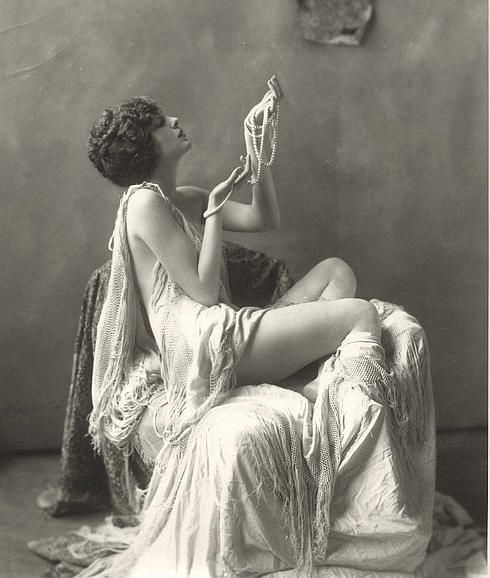

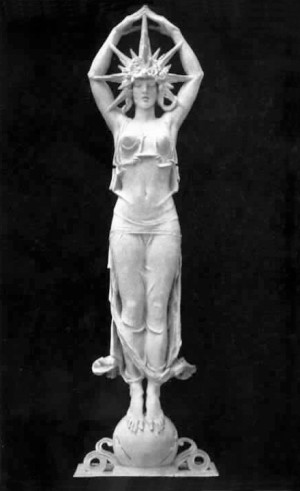
She posed for the Star Maiden statue, which was reproduced ninety times to serve as the pillars of an exhibit at the 1915 Panama-Pacific International Exposition in San Francisco.
Her lovely image was everywhere, featured in statues, movies, newspapers, plays, and public appearances. But with good fortune comes the jealousy of those less fortunate, and fame can sometimes disappear as fast as it comes. Misfortune struck Audrey when she and her mother rented a room in the boarding house from Dr. Walter Wilkins. The doctor became infatuated with Audrey, and one day, he claimed his wife had been killed by an assailant. After an investigation, it was found that Walter had murdered his wife. Audrey was wanted for questioning, but she and her mother fled to Toronto as terrible rumors and gossip spread in all the tabloids around the world. Eventually, the murdering husband was tried, found guilty, and sent to the electric chair. He hanged himself in his cell before the execution. Audrey soon became labeled as an evil home wrecker. Her provocative poses and her nudity in films encouraged the world to think of her as wicked and untrustworthy. She soon found it increasingly difficult to find work.

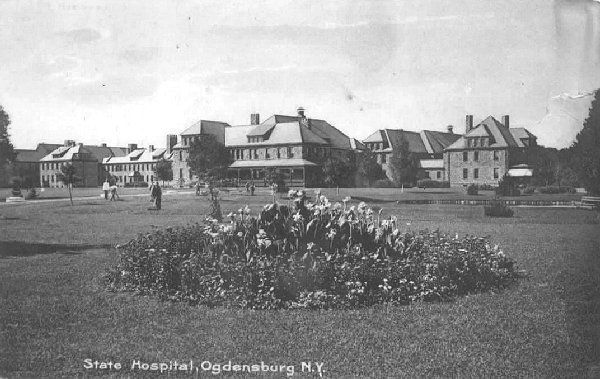
Audrey and her mother returned to the farm in Mexico in 1919. Gradually, the three prophecies of gypsy fortune teller came to be. Her fame and happiness disappeared. She had made a fortune, but with no work, the money disappeared. Men had pursued her, and she had many proposals, but she never married. It was rumored that once more a marriage proposal had been rescinded and, on March 27, 1921, Audrey, at the age of 28, tried to kill herself by swallowing poison. From 1921 to 1931, the beautiful Audrey slowly descended into despair, and her behavior became increasingly erratic. In 1931, Kittie was no longer able to take care of her, either physically or financially, and Audrey was committed to the St. Lawrence State Hospital in Ogdensburg, New York. She spent 65 years in that institution, dying there in 1996 at the age of 104.
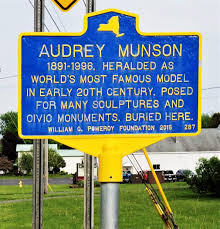
Ironically, the subject of so many lovely monuments was buried, until recently, in an unmarked grave in Fair Haven, New York, not far from her family’s hometown.

The uncertainty of being a woman is clearly evident in this tragic story. Audrey was the ideal, America’s Venus. She was beautiful, with perfect feminine symmetry and features. But somehow, it wasn’t enough—not enough for the world that wished to exalt her, as it also came to condemn her.
She was the model of myths, the personification of womanhood, the ancient ideal of the revered goddess, the giver of life. However, over time, history diluted this reverence with archetypes of the “anima” in stories about mermaids, nymphs, crones, and witches, who, to quote Carl Jung, “infatuates young men and sucks the life out of them.” Further storytelling continued to be a cultural chain for women. The sagas for men had glorious plots of heroic challenges or quests for meaning and truth. However, in fairy tales, the persona of femininity was often synonymous with weakness, and females were frequently portrayed as needing to be rescued.
This label is substantiated many times. It took many years and considerable persuasion, from the Women’s Rights Convention in Seneca Falls in 1848 to 1920, when American women were finally allowed to vote. And poor Audrey was not alone in the insane asylums of America. In the 1800s, a woman could be declared insane by the recommendation, whether substantiated or not, of a father, brother, husband, or son. The adjective “crazy” is still widely used to criticize women today. And the new term “Karen” cautions females not to be too outspoken or assertive.
This manipulation is constant. It hides behind a million customs and norms. It presents itself in print and TV commercials, as well as on our digital devices. It is reinforced in our everyday lives as we judge, compare, and label one another, engaging in name-calling, slander, and gossip. It is a campaign to create doubt and cause women to question every aspect of their being, from their appearance to the validity of their intellect.
If only someone had taken the time to help Audrey Munson and told her to shut out all the noise. If only someone helped her understand that she was more than enough. If only someone had helped her rid herself of doubt and encouraged her to keep going.
This story of America’s first supermodel teaches a lesson. Women are heroes and have been heroes since the beginning of time. We need to be greater heroes in developing our own stories. We must be self-motivated, not manipulated. We must listen to our inner voices and not the random opinions of others. The time for uncertainty must end. We need to be more aware and persevere.
Copyright 2022 theautonomoustraveler.com All rights reserved.
 The Autonomous Traveler
I sure have missed you! Thank you for the powerful words that you have woven within the lines of Audrey’s story.
LikeLiked by 1 person
Thank you so much ,Terry. Doubt in my own abilities delayed the writing of this. I have to follow my own advice. I felt so great, a real sense of accomplishment yesterday when I finally posted this story.
LikeLike
Outstanding research and reflections. Thank you for sharing your discoveries and opinions. What a life for Audrey!?
LikeLiked by 1 person
Thank you for bringing her life to “life” something it seems you discovered in your detailed research that she was robbed of just for being a beautiful, courageous young woman in times when woman were thought of as nothing more than child bearing home makers! So sad she lived out most of her life in an insane asylum. Loved your tribute and Audrey will now remain in my thoughts and heart forever.
LikeLiked by 1 person
Thank you, Bonnie, for understanding her story and why it is important to remember her not just as a being in stone but as real living person.
LikeLike
I’m disappointed at your referring to the term “Karen” as a term intended to hold women back. Every time I have seen it used it has referred to white women who are in some way racist or inclined to claim privilege over others who are actually equally deserving. I can see the connection, but I do not believe it to be a parallel.
LikeLiked by 1 person
I’m delighted to receive another newsletter from you, and interested to know that Audrey was born in Rochester. However, I’m a bit disappointed at your inclusion of the term “Karen” as an example of holding women back.
Every use of the name “Karen” that I have seen of late has referred to white women who are claiming privilege over Black people in one way or another. While I can see the connection, I do not believe that there is really a parallel between Audrey and present-day “Karens.”
LikeLiked by 1 person
Good to hear from you, my friend. I see the term “Karen” being expanded and used quite often, many times beyond racial context Putdowns have a way of running wild when they become part of the uninformed popular culture. In the last five years the use of labels have really divided our country. They seem to have a life of their own and we never realize the damage they cause until it’s too late.
LikeLike
Wow! I Iove your insights on Audrey and the connection to a wider meaning for all women. A very thoughtful blog post. And of course, I hate that my beautiful name “Karen” has now been kidnapped to mean something else. All those named Karen since birth should mount some kind of protest at the negative use of our name!
LikeLiked by 1 person
Thank you, Karen. I agree. Labels, of any kind, are not good. Generalities are not fair. People need to be seen and known as individuals.
LikeLike
Joyce,
Fascinating tale, and a cautionary one.
As part of my nursing education, my class spent 3 months at SLPC studying abnormal psychology and interacting with the patients. It was in 1967, when patients could still stay there for years. Electro-shock therapy was still used to treat manic-depression (today known as bipolar disorder); there were very few effective medical options.
One elderly patient had been a ballerina, and she would occasionally get up from her chair in the Day Room and perform some movements from a long-ago performance.
Joanne
Sent from my Verizon, Samsung Galaxy smartphone
LikeLike
Thank you so much, Joanne, for these firsthand insights. So many sad stories. The problems aren’t being solved, in fact, with with all that’s going on in the world the problems just keep growing.
LikeLike