
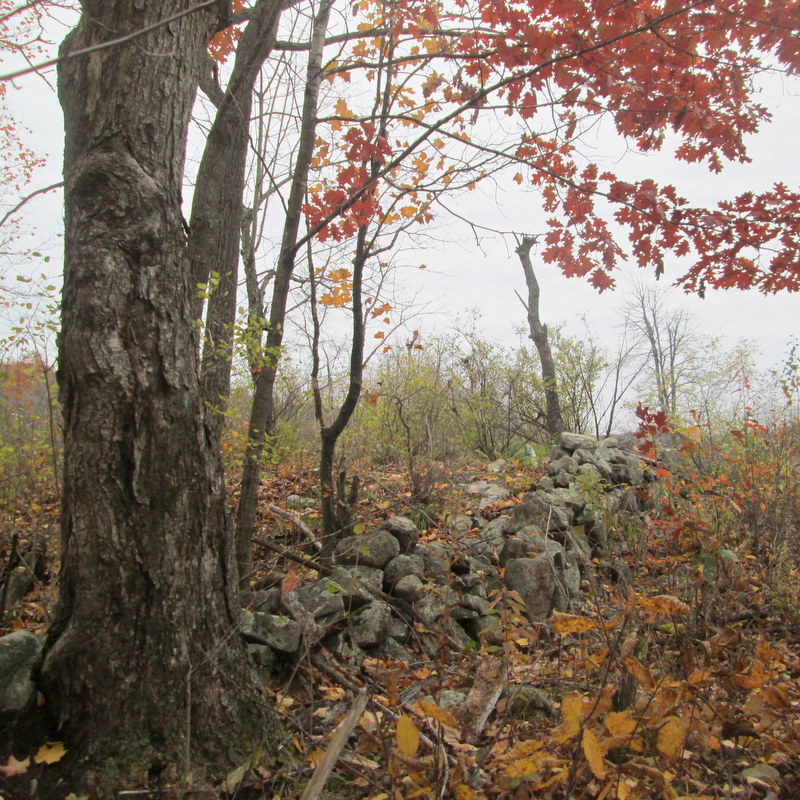
A mystery. I ignored the clues until my sorority sister, Annie, pointed out that the stone walls at the edge of my Northern New York State property were most likely used centuries ago to prevent sheep from entering my woods. How did sheep get to The North Country, a wilderness overrun by wolves, lynx, and cougars well into the early 1800’s?
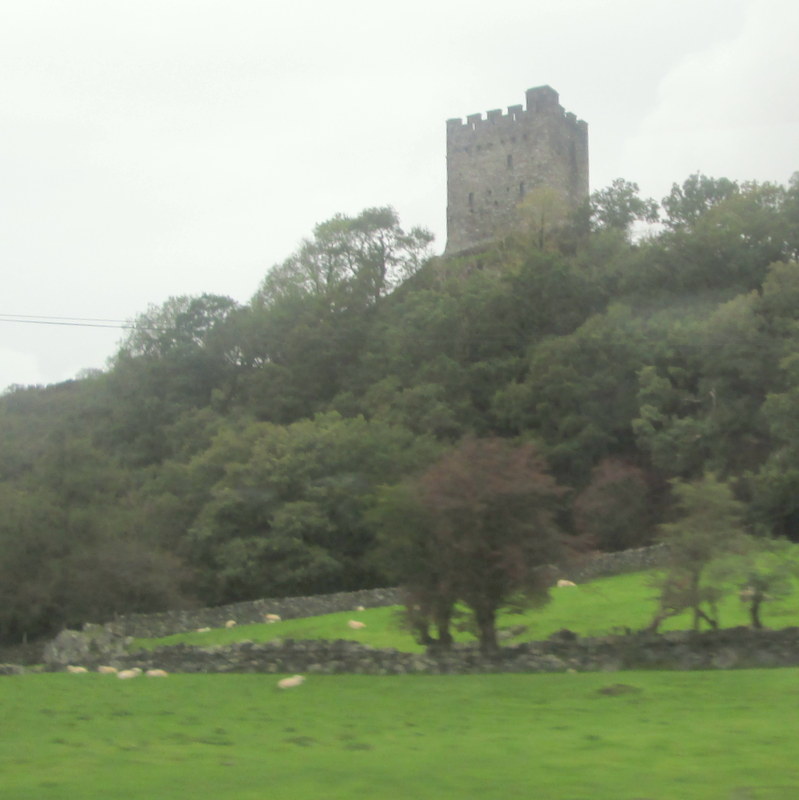
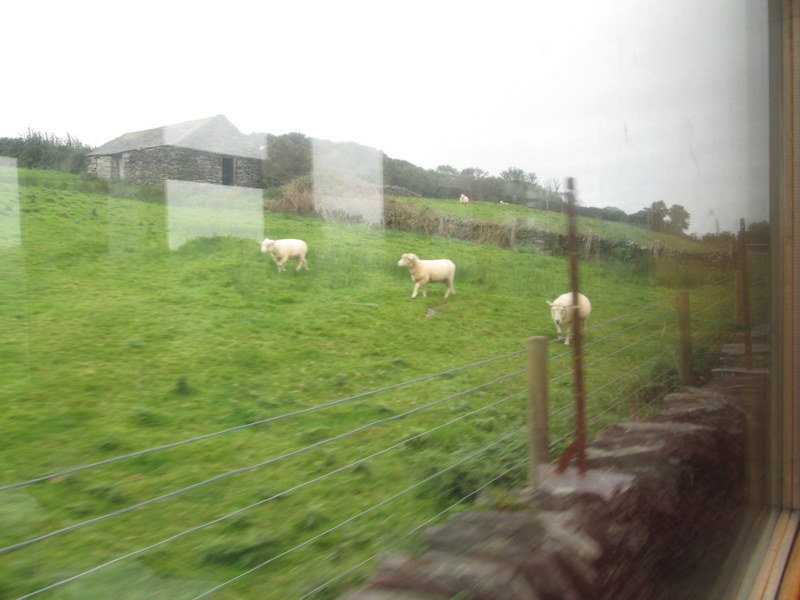
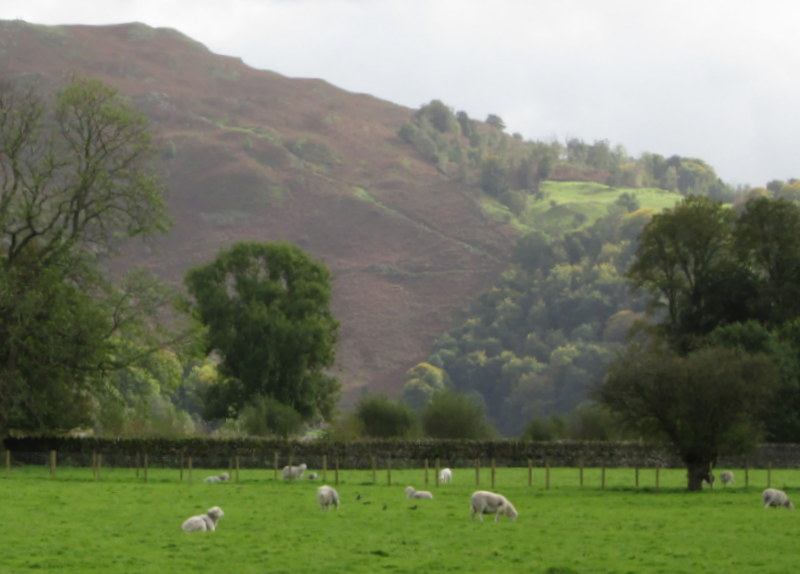
I went to Great Britain because I was interested in finding context. Until the American Revolution, our country was a colony held by the British. A tour bus ride across Scotland was both startling and familiar. It was overwhelming in its cliche beauty, white fluffy sheep in deep green fields surrounded by miles and miles of ancient stone walls. I watched in a trance that could only be reached when the mind sees, in rarefied reality, something it thought it understood from photographs.

I was enchanted.


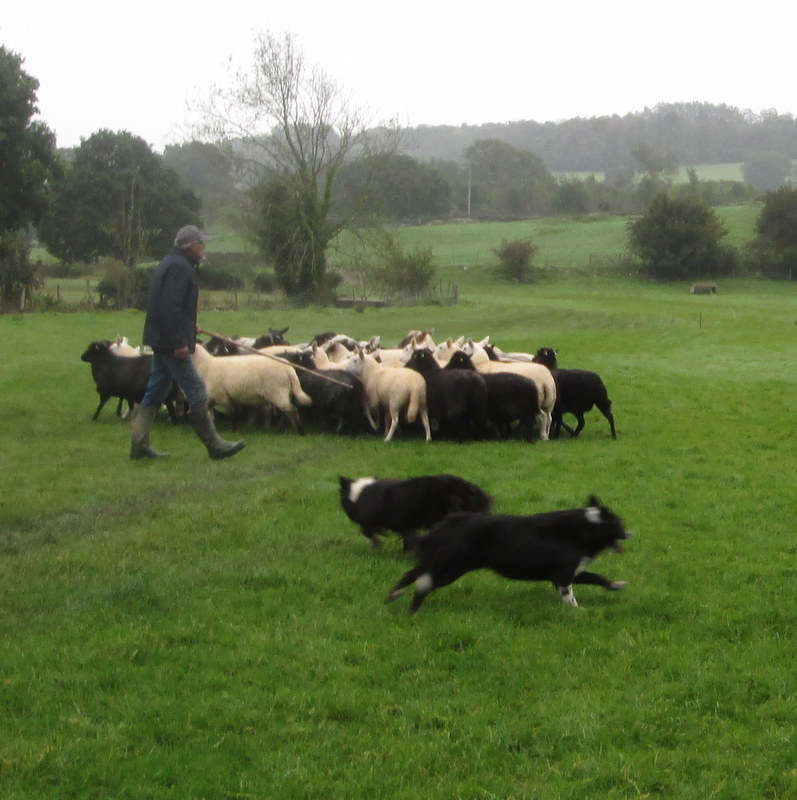

I soon discovered the overwhelming importance of wool. I recalled what I learned when I took a wilderness survival class many years ago in the Adirondacks. “Death comes in three minutes without air, three hours without shelter, three days without water, three weeks without food.” Our clothes are a shelter, protecting us from sunburn and dehydration in the heat and hypothermia in the cold. Early people used the skins of animals to protect their bodies. Most likely, by accident, someone discovered the potential of wool, that if fleece was put in hot water, it could then be pounded into felt pieces for garments.
Women were in charge of many domestic tasks throughout history, and we owe a big debt to them for their problem-solving skills that led to innovation. The simple act of weaving fibers together, first for baskets and mats and then to make cloth, propelled civilization forward. I find it fascinating that forming a continuous perpendicular pattern of fibers became a standard practice worldwide. Men were weavers, too, but in early history the act of sitting in front a primitive frame and for hours making cloth was mainly due to the diligence of women in a lot of cultures. I feel a need to give them credit.
During the Middle Ages (1100-1500 AD), wool fueled Britain’s economy. Known as White Gold it was actively exported to other European countries. To this day, the head of the House of Commons sits on a bale of wool. The tradition started in the 1300s.
In the second half of The Middle Ages, wool cloth became Britain’s main export, two-thirds of all it produced. It was a cottage industry with three separate steps, washing the wool, converting it to thread with a drop spindle, and finally the process of weaving. Many men were involved in this process as knitters.
From 1750 to 1850, Scotland went through the Highland Clearing when tenant farmers were pushed off the land to make room for sheep pastures. It was a time of social and economic upheaval, and many chose to migrate out of Great Britain. Some came to America, and there are clues of this in my area, numerous signs that carry the words Scotch Settlement Road.
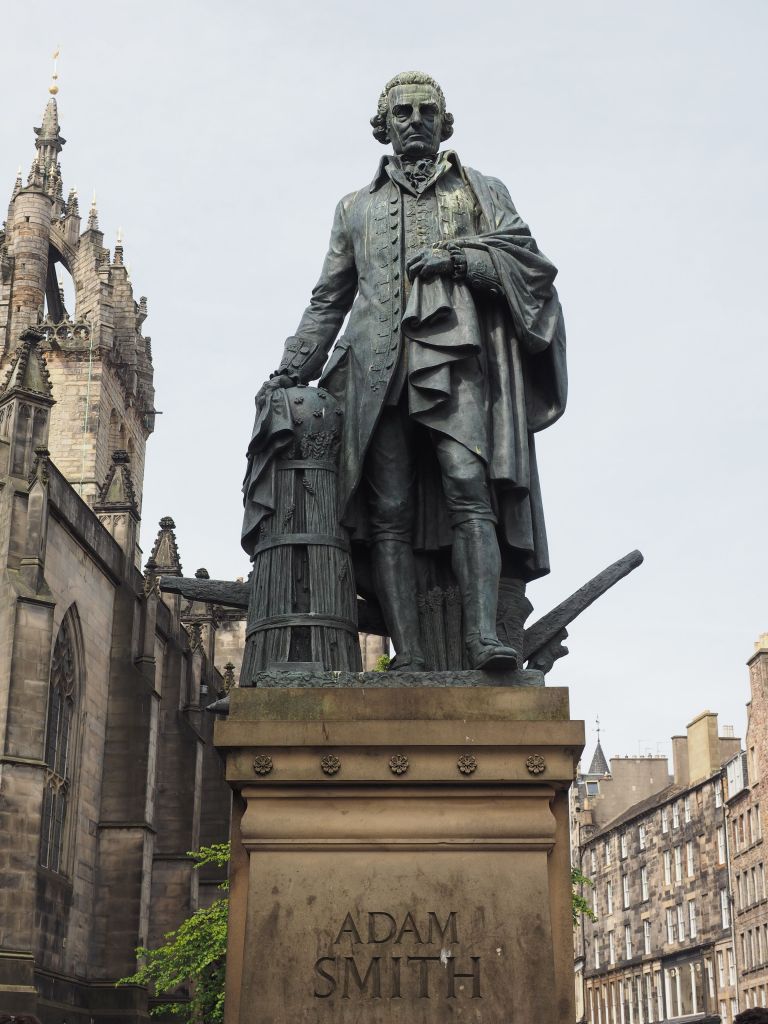
Wool was an important player in the industrial revolution in Britain and the world with the invention of mechanized machines run by waterpower, The Spinning Jenny (1770), The Flying Shuttle (1773) The Power Loom (1785), and Jacquard Loom (1804), a precursor of computers with its punch cards to make different designs in the cloth. I saw a statue of Adam Smith, in Edinburgh. His thoughts parallelled a shift in society from cottage industries to the factory model which required specialization and division of labor.
But how and when did sheep come to the wilderness of my North Country? Before my trip, I had done some research. I discovered that after the American Revolution, due to economic and political conflicts in Europe, the rich of that continent invested their great wealth in my county and neighboring counties by buying up vast tracts of land. As a result, two of those speculators, James LeRay from France and George Parish from Belgium purchased Merino sheep to graze on their new purchases.
Surprisingly, Napolean was involved in my story. Merino sheep became prized for their softer, better-quality wool. They were bred by Spain, who wanted to keep them within their borders to create higher prices for their fleece.

At this time, Napolean’s activities were also pushing Europe into chaos. A group of smugglers took advantage of the situation to secretly transport a boatload of Merino sheep to America. Soon the Merino sheep could graze safely and increase their numbers because local governments in wilderness areas put bounties on the heads of the wild animals that endangered them.
There is another North Country story about the frenzy over wool. The people in my area, around the time of the birth of America, made a lot of money from our forests. Trees and lumber were transported to Montreal through the St. Lawrence River. Potash, made by burning wood and then leaching the ashes in water, was used in Great Britain to remove the lanoline from the wool before it was spun. Before the War of 1812, our new government boycotted trade with England, which led some disgruntled locals to object and engage in the smuggling of potash to Canada by boat and sled during the winter.
I never knew what I would learn on any of my trips, and the story of wool was a wonderful surprise. Great Britain gave me a wonderful understanding of how world history impacted my home. I plan to go back to the highlands of Scotland next year. I need to learn more. I’m very sure I will.
(Coming soon is the story of the cotton triangle, which involved Great Britain, Africa, and the US, including the North Country.)
Copyright 2023 theautonomoustraveler.com All rights reserved.
 The Autonomous Traveler
Very interesting, as usual. You are a wealth of information. I enjoy reading about your experiences and discoveries.
LikeLike
Thank you so much, Tammy. More to come. I learned so much on that trip.
LikeLike
This is very interesting! We are going to be in Scotland next April. You gave us some great ideas of things to look for!
Sent from my iPhone
LikeLiked by 1 person
Thanks, Joan. I hope you enjoy it as much as I did.
LikeLike
I loved your story, “The Scottish Sheep Connection”. You are truly a writer of history (which is my favorite genre). I feel the strength of your writing has always been the connections you make from the historical aspects…past or present…from your personal experiences.
Looking forward to reading your next story regarding the triangle cotton connection between Great Britain, African, the U.S. (North Country).
LikeLiked by 1 person
Thank you, Lana.
LikeLike